Oct 28, 2026Buying Guides
Watch Bezel Removal Tool Guide: Removers, Blades and Pry Sets Compared
Compare dedicated watch bezel removal tools, steel square-blade presses, and non-marring die sets. Select the right remover for your case and send measurements for verification.
Watch bezels secure crystals, retain rotating dive scales, and frame case profiles, but removing them presents a serious risk of surface damage. Prying with a handheld knife concentrates force at a single point, frequently causing slipped blades, gouged lugs, or bent rings. Dedicated bezel removal tools replace unguided prying with balanced radial leverage. Opposed tapered blades or calibrated synthetic dies advance inward simultaneously, lifting the bezel squarely off the case without tilting. Kocandy supplies dedicated bezel tools spanning aluminium alloy wrench fixtures with plastic dies, bench-mounted steel square-blade presses, spring-loaded four-piece hardened tip tools, and dual-purpose case openers.
Watch Bezel Removal Tools: Why Dedicated Fixtures Outperform Hand Pry Knives
Handheld case knives apply upward leverage at a single point. This asymmetric force tilts the bezel, driving the opposite edge downward against the case neck or crystal rim. Excess pressure causes the blade tip to slip across polished lugs, leaving severe scratches or warping thin rings.
Dedicated bezel fixtures eliminate this risk through multi-point radial engagement. Turning a drive knob or adjustment wrench advances opposed blades or contoured dies simultaneously into the seam between bezel and case. This wedging action converts rotational torque into uniform vertical lift across four quadrants, releasing the bezel parallel to the case without binding. Our watch case opener buying guide covers the rest of the case-opening kit.
Aluminium Alloy Opener with Graduated Plastic Dies: 30 mm to 52 mm Range
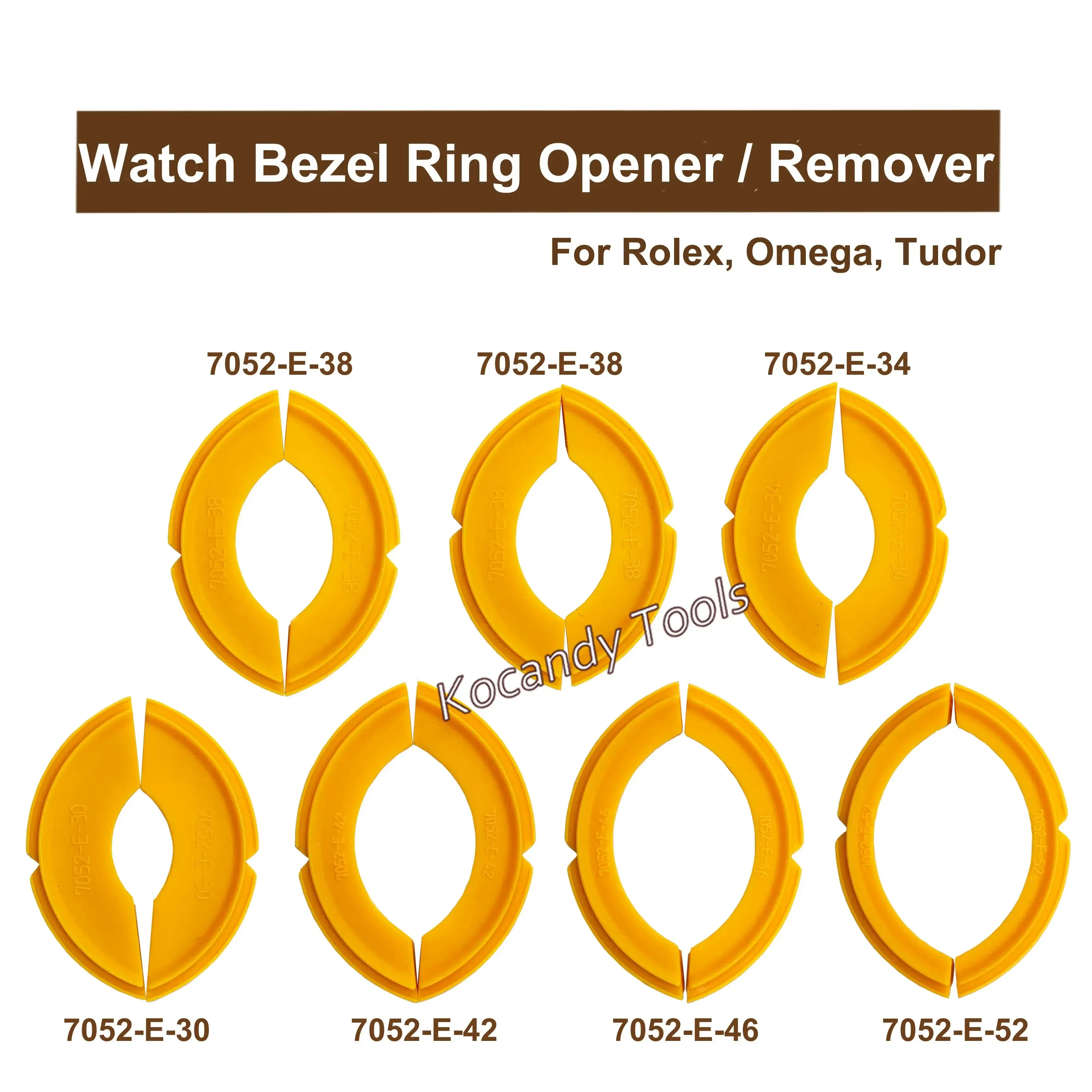
When protecting polished surfaces or soft aluminium scale inserts is critical, a die-based tool provides complete perimeter shielding. Kocandy catalogs an aluminium alloy watch bezel ring opener engineered for both amateur enthusiasts and professional repairers.
Constructed from aluminium alloy and durable synthetic components, this fixture weighs 460 grams. It incorporates an ergonomic wrench measuring approximately 165 mm (6.5 inches) in length, paired with a knurled screw clamp and handle accommodating bezels up to approximately 68 mm (2.7 inches) in diameter.
The system includes fourteen graduated plastic dies housed in a dedicated plastic storage box. High-quality synthetic plastic forms each open ring mouth, gripping beneath scale rings without scratching metal or chipping crystals. The dies span six diameters in the 7052-E series, from 30 mm (7052-E-30) up to 52 mm (7052-E-52).
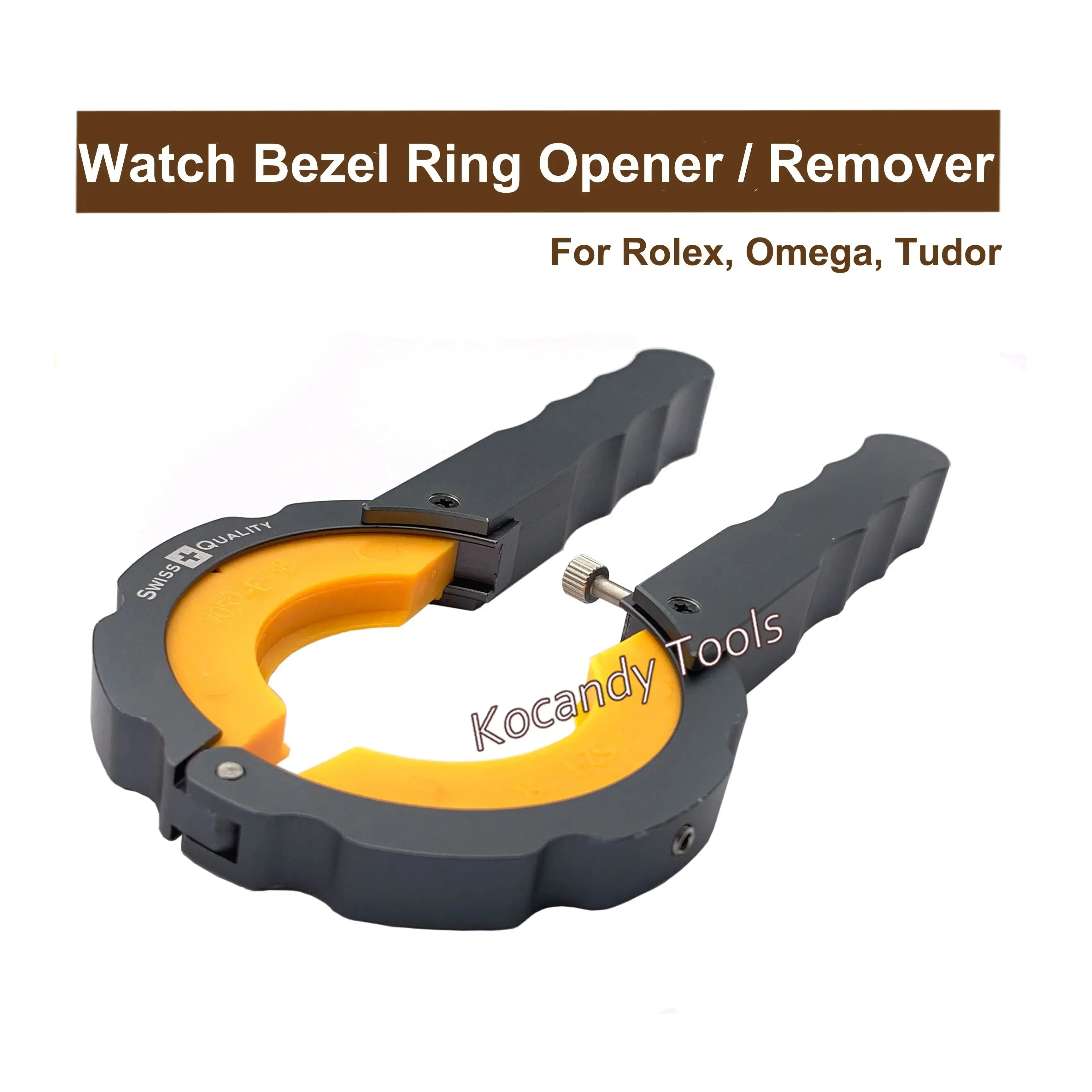
Aluminium alloy bezel ring opener wrench with knurled screw clamp and handle.
Bench-Mounted Steel Remover with Square Blades: Four-Flange Radial Grip
For tight press-fit bezels where synthetic dies lack wedging stiffness, a bench-mounted steel tool delivers rigid mechanical leverage. Kocandy catalogs a heavy-duty steel watch bezel ring remover for precision workshop disassembly.
Weighing 0.9 kilograms, this steel fixture features a stable bench base measuring 16.1 cm long, 9.8 cm wide, and 8.6 cm high, with a 9.8 cm diameter envelope. A large central overhead knob drives four steel square blades simultaneously along milled tracks.
Each blade terminates in a sharply tapered flange. As the knob turns, all four flanges glide into the seam between bezel and case shoulder, generating an immediate, balanced upward parting motion. Catalog specifications state this tool works well on gold watch cases and bezels found on Rolex watches and other luxury timepieces. The tool is supplied boxed, with finish colour chosen at random upon dispatch.
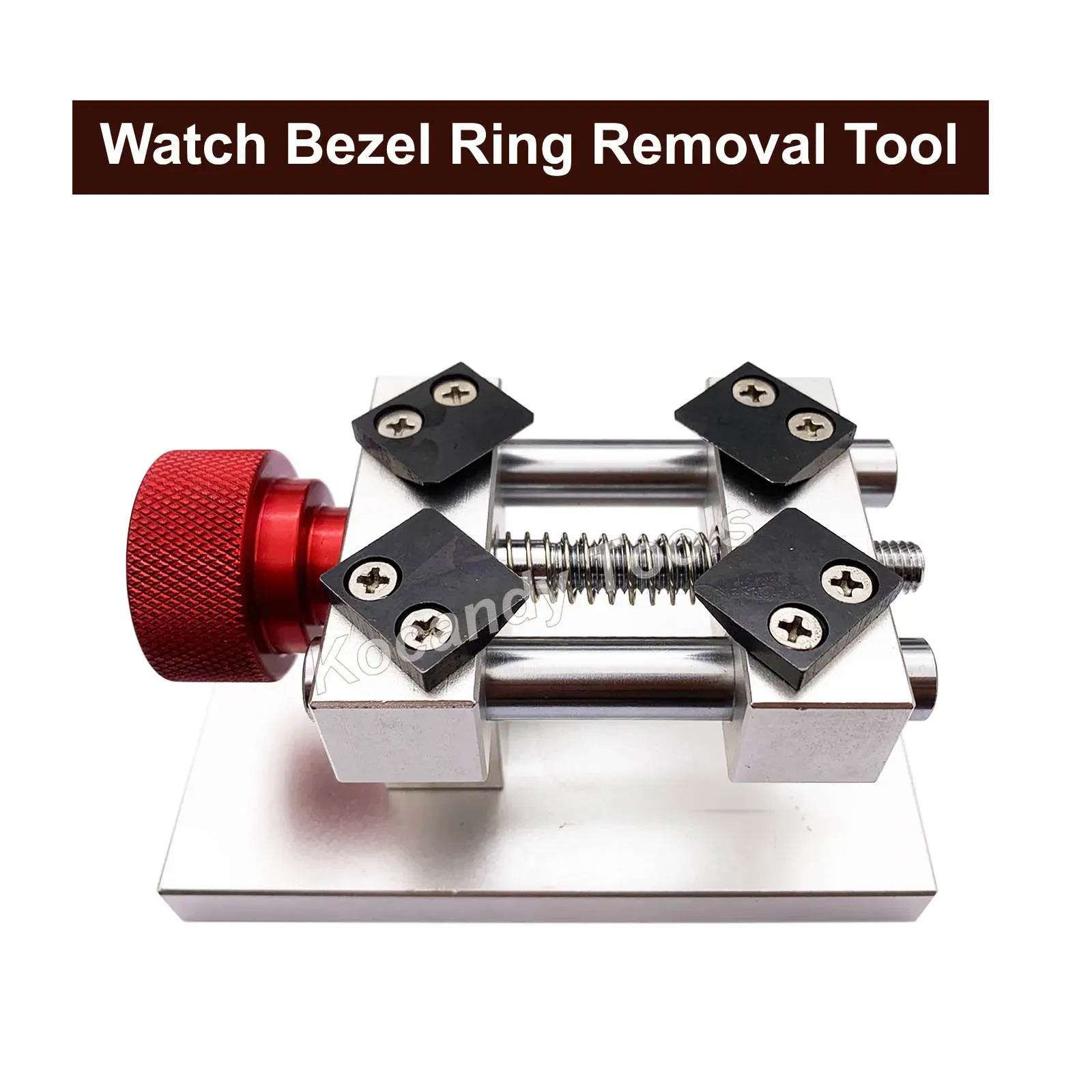
Steel bench bezel remover featuring four square tapered blades and a central adjustment knob.
Spring-Loaded Four-Piece Hardened Tip Remover: Adjustable Case Holding
Cases with asymmetrical lugs, crown guards, or thicker sport profiles require adaptable positioning. For these watches, Kocandy offers a compact metal bezel removal tool fitted with four hardened contact pieces.
Machined from sturdy metal resistant to deformation, this 700-gram fixture measures 12 x 6.5 x 6.5 cm (4.72 x 2.56 x 2.56 inches). An integrated compression spring secures the watch case against the lower platen, stabilizing the assembly during blade engagement.
Four hardened contact pieces driven by knurled rollers apply precise pressure at the bezel parting line. An adjustable case holder repositions support points to fit varied case diameters, preventing slippage and shielding lug chamfers. The unit is supplied boxed, with finish colour selected at random upon dispatch.
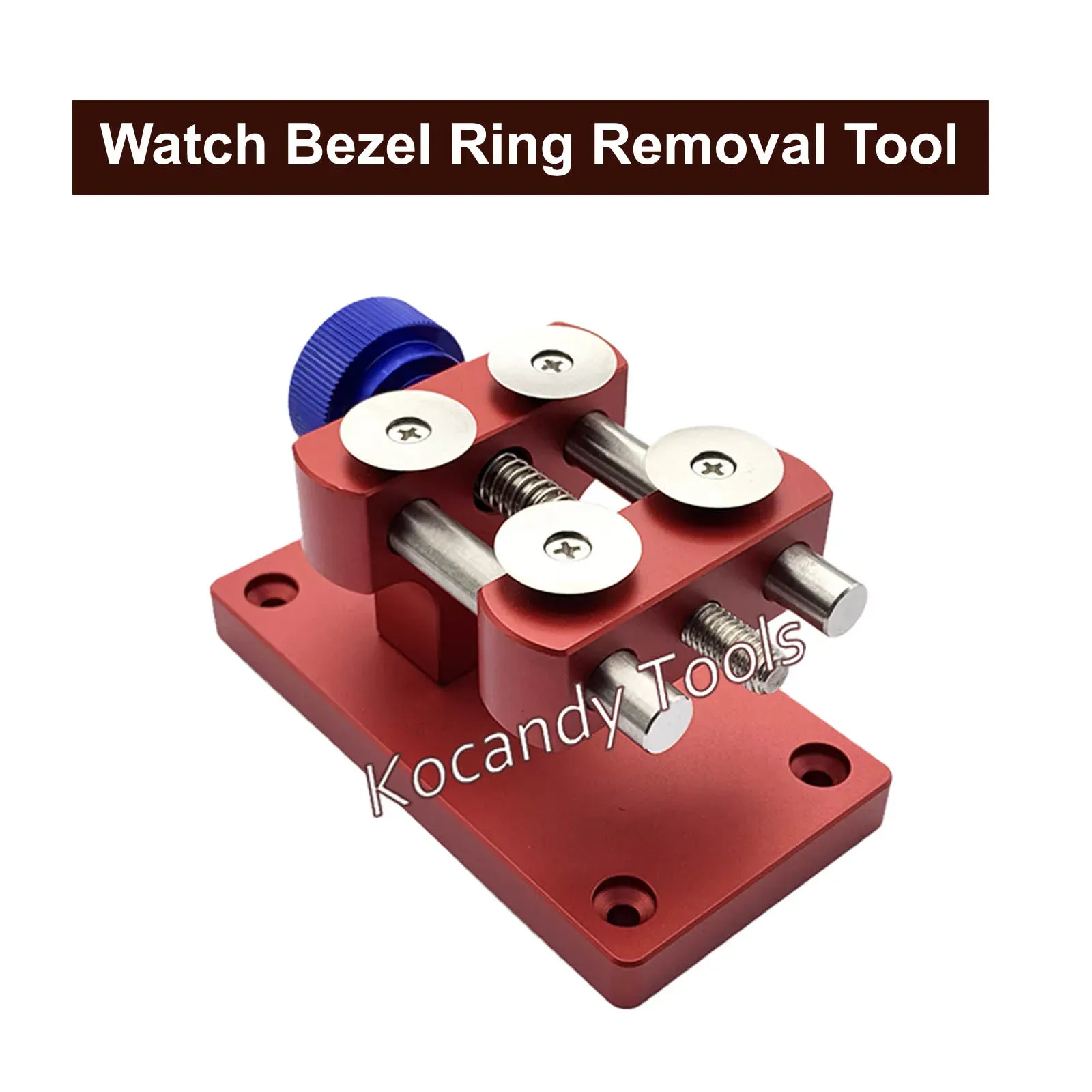
Compact metal bezel remover with four hardened contact pieces and compression spring.
Dual-Purpose Steel Bezel Remover and Case Back Opener: Model 2903
In compact workshops, multi-functional tooling saves bench space. Kocandy catalogs a heavy-duty steel tool that functions as both a bezel ring remover and a snap-on case back opener, identified in catalog media as model 2903.
Constructed from solid steel and weighing 670 grams, this fixture is supplied in a single yellow box. Its mechanism features four sharply tapered flanges mounted on precision guide ways and driven by knurled side screws.
The four tapered flanges advance radially into the recess, gripping the ring securely while preventing scratches on the case. The rigid jaws and fine screw pitch also allow this tool to double as an opener for stubborn snap-on case backs. Catalog specifications note it is well suited to gold watch cases and bezels common on Rolex watches and other luxury timepieces.
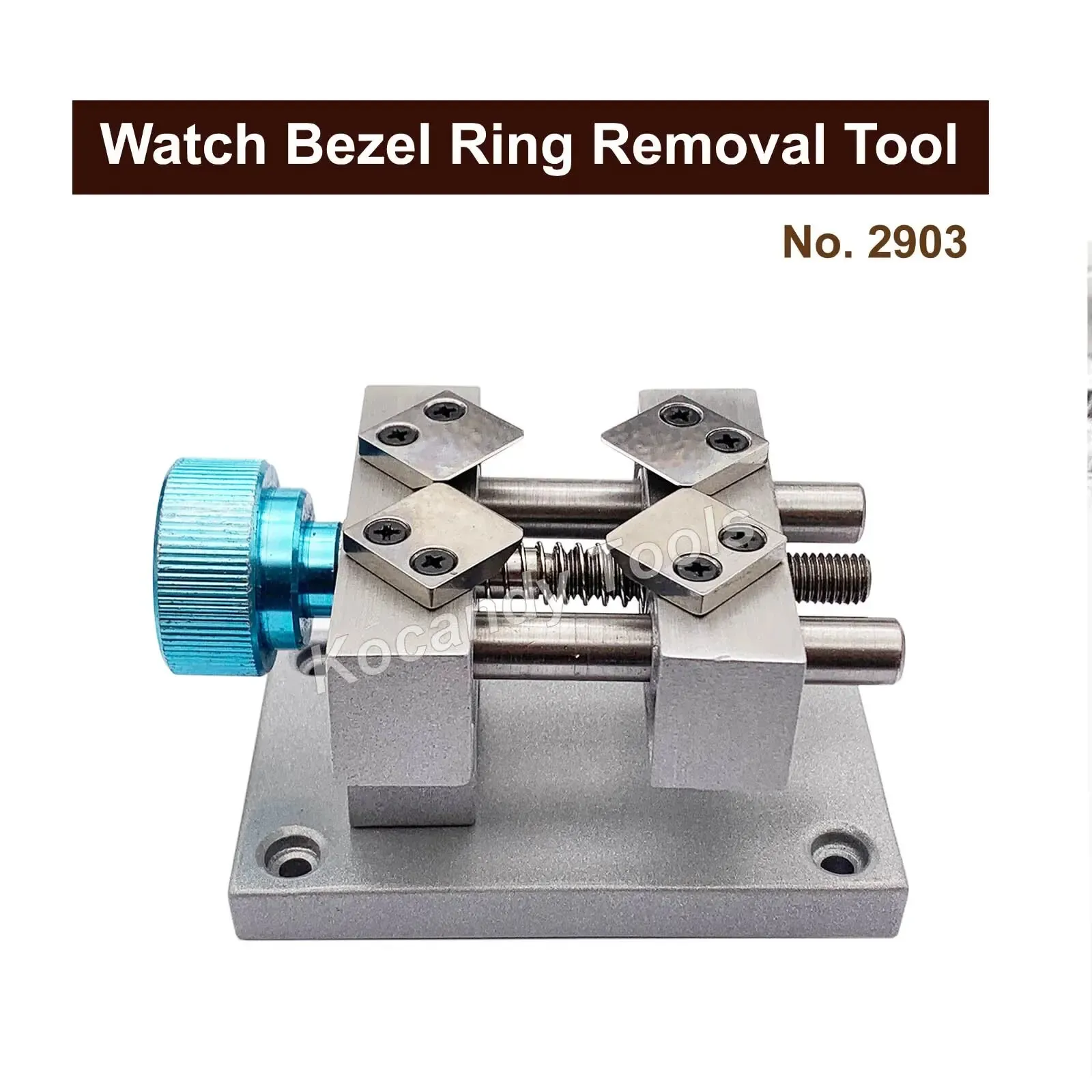
Model 2903 steel bezel ring remover and case back opener with four sharply tapered flanges.
Common Bench Techniques: Cushioning, Gradual Advancement, and Soaking
Even with multi-blade removers, careful bench technique safeguards high-grade watch finishes. Experienced watchmakers commonly employ three practical methods:
- Sacrificial film cushioning: Place thin polyethylene film (such as a plastic bag) or protective tape over lugs and case shoulders before positioning blades. Tapered steel blades press through the film into the seam, using plastic as a barrier against scratches.
- Incremental multi-point advancement: Advance opposed screws in small increments—roughly one-quarter turn per side—working around the perimeter to lift the bezel squarely. If a bezel resists initial torque, similar progressive force principles apply as detailed in our stuck watch case back removal guide.
- Warm soapy water immersion: Bezels worn for years often bind from dried perspiration and grime. Soaking a water-resistant watch in warm soapy water for 15 to 30 minutes softens encrusted debris, reducing the force required to release the friction fit.
Inspecting Bezel Gaskets, Wire Springs, and Retention Rings
Once the bezel releases from the midcase, inspect internal retention components before proceeding with cleaning or crystal work:
- Click springs and wire retainers: Rotating dive bezels rely on a flat click ring with ratcheting teeth or a polygonal friction wire seated in an internal groove. Inspect these components for distortion, flattened tabs, or corrosion. Clean ratchet teeth with soft pegwood.
- Elastomeric bezel gaskets: Many friction-fit and rotating bezels utilize an ultra-thin rubber O-ring or nylon gasket between bezel ring and crystal seat to provide rotational tension and exclude dust. Over time, these gaskets flatten, harden, or tear.
- Gasket measurement and replacement: A damaged gasket causes loose rotation or prevents the bezel from seating flat. Measure the gasket groove and bezel diameter with a caliper, and consult our watch case back gasket and O-ring size guide to select compatible replacement profiles.
Watch Bezel Removal Tool Comparison and Selection Tables
Table 1: Technical Specifications of Dedicated Bezel Removal Tools
Product Description & Stated Model | Tool Material | Dimensions & Stated Weight | Blade Mechanism & Die Assortment | Included Packaging & Finish | Catalog Product Link |
|---|---|---|---|---|---|
Aluminium Alloy Bezel Ring Opener | Aluminium alloy + plastic | Wrench approx. 165 mm (6.5 in); bezel dia. approx. 68 mm (2.7 in); weight 460 g | Knurled screw clamp with 14 plastic dies: 7052-E-30 (x2), 34 (x2), 38 (x4), 42 (x2), 46 (x2), 52 (x2) | Plastic storage box x 1, wrench x 1, handle x 1 | |
Bench Steel Square-Blade Remover | Steel | Length 16.1 cm, width 9.8 cm, height 8.6 cm, dia. 9.8 cm; weight 0.9 kg | Four square blades with sharply tapered flanges; overhead turn knob | Supplied in a box; random colour dispatch | |
Four-Piece Hardened Tip Remover | Sturdy metal material | 12 x 6.5 x 6.5 cm (4.72 x 2.56 x 2.56 in); weight 700 g | Four hardened contact pieces; knurled rollers; compression spring; adjustable case holder | Supplied in a box; random colour dispatch | |
Steel Bezel Remover & Opener (Model 2903) | Steel | Stated weight 670 g; dimensions Confirm by message | Four flanges with sharply tapered edges; knurled side adjustment screws | Supplied in a single yellow box |
Table 2: Tool Architecture Selection by Bezel Style and Case Construction
Bezel Construction & Case Style | Recommended Tool Architecture | Primary Engagement Method | Key Bench Advantage | Fit Verification Check |
|---|---|---|---|---|
Acrylic crystal retaining bezels and soft scale rings | Aluminium alloy wrench with contoured plastic dies | Calibrated plastic die mouth envelopes bezel circumference without metal contact | Eliminates scratches on polished bezel rims and soft alloy scale rings | Match die code to bezel outer diameter (30 mm to 52 mm) |
Tight friction-fit steel or precious metal bezels | Heavy bench steel remover with four square blades | Four sharply tapered flanges advance simultaneously under central knob drive | Provides rigid, perpendicular lift across four quadrants to prevent canting | Confirm seam clearance; gold cases require protective plastic shim |
Rotating dive bezels and cases with varied lug profiles | Spring-loaded metal remover with four hardened tips | Adjustable case holder seats case body while four hardened tips engage seam | Compression spring absorbs uneven shock and maintains steady grip | Check case diameter and lug clearance against 12 x 6.5 x 6.5 cm frame |
Dual-use bench service: stubborn bezels and snap case backs | Model 2903 steel fixture with four tapered flanges | Opposed knurled thumbscrews drive tapered flanges into case back or bezel seam | Compact steel footprint serves both bezel lifting and friction case back opening | Verify blade thickness against case seam; quote Model 2903 |
Table 3: Common Bench Issues and Preventive Procedures
Bench Challenge | Underlying Cause | Recommended Bench Practice (Hedged) | Preventive / Corrective Action |
|---|---|---|---|
Bezel ring binds or jams during extraction | Uneven lifting force causes one side of the bezel to tilt and bite into case neck | Advance adjustment knobs incrementally (1/4 turn per side) in an alternating cross pattern | Stop immediately; reseat fixture squarely before resuming tension |
Accumulation of dried dirt or corrosion in bezel groove | Debris cements the click ring or friction wire to the case shoulder | Pre-soak cased watch or bare midcase in warm soapy water to soften deposits | Dry thoroughly; reapply gentle mechanical blade tension |
Risk of tool blade marring polished case horns or lugs | Direct metal-to-metal contact under high lateral wedging pressure | Place thin polyethylene film or watchmaker protective tape across the case shoulder | Provides sacrificial barrier; verify blade edge enters seam beneath the tape |
Mushy bezel rotation or loose click action after reassembly | Bezel O-ring pinched, dried out, or wire click spring deformed during removal | Inspect gasket profile; measure cross-section and inner diameter with caliper | Replace worn seal following watch case back gasket and O-ring size guide |
Compiling Your Bezel and Case Identifiers Before Inquiring
To confirm tool compatibility or inquire about replacement dies, compile your case measurements into a concise bench identifier before messaging Kocandy:
- Outer Bezel Diameter: Measure the widest external diameter across the outer bezel rim using a vernier caliper to the nearest 0.1 mm.
- Seam Clearance: Inspect the seam between bezel underside and case shoulder to determine whether it accepts square steel blades or contoured plastic dies.
- Bezel Type: Note whether the watch features a friction bezel, a rotating dive bezel with click spring, or a fixed press-fit dress bezel.
- Case Material: State whether the case is stainless steel, gold, gold-plated, or titanium, indicating whether plastic dies or cushioned steel blades are preferred.
- Catalog Reference: Quote Model 2903, the 7052-E die series, or the square-blade steel remover.
Workshop Inquiries and Brand Disclaimer
Kocandy is an independent supplier of watchmaker tools and replacement components. Kocandy is not affiliated with, authorised by, or a dealer for any watch brand or tool manufacturer mentioned, including Seiko, Rolex, Omega, Citizen, Breitling, Panerai, Hublot, ETA, Bergeon, Horotec, or Vetus. References to specific brands or models represent catalog stated-for designations and bench application examples only.
If your bezel diameter, case geometry, or required tool configuration is not listed above, send your measurements and case details through our contact page. We check customer inquiries directly against our workshop catalog and reply within one working day.