Oct 11, 2026Reference & Sizing
Seiko 5 SNK Spring Bar Size Guide: Lug Widths, Diameters, and Strap Replacement Hardware
Measure before you order: Seiko 5 and SNK lug widths, spring bar diameters, and the 6825 pliers, built from our catalog listings. Send your numbers and we will match them.
A frequent technical inquiry at our bench involves owners seeking replacement spring bars for Seiko 5 and SNK watches when swapping straps or bracelets. To clarify our catalog scope upfront: Kocandy does not manufacture or sell finished leather watch straps, fabric bands, or steel bracelets. Our catalog focuses on precision watchmaker spring bars, quick-release pins, rivet-end tubes, and removal pliers. Choosing the correct pin length and diameter is critical to prevent accidental strap detachment or sleeve binding.
Seiko 5 spring bar sizes: nominal dimensions and bench verification
Every watch spring bar is defined by two foundational physical dimensions: uncompressed body length and exterior tube diameter. The uncompressed body length must correspond to the internal distance between the two inner lug walls of your watch case, allowing internal coil springs to seat the stepped pivots firmly into the drilled lug recess holes.
In standard bench practice, uncompressed pin length typically measures 1.0 mm to 2.0 mm wider than the nominal lug gap so internal springs maintain constant outward seating pressure against the case walls. However, production revisions across factory assembly eras, aftermarket bracelet tolerances, and subtle case variations make direct physical measurement essential before selecting replacement pins.
Lug widths commonly listed for Seiko 5 and SNK references
Within enthusiast reference databases and workshop catalog documentation, Seiko 5 and SNK cases span several standardized lug dimensions. These figures represent nominal reference points rather than guaranteed factory tolerances for every individual timepiece:
The classic compact military and field models—frequently documented in reference guides under model numbers such as SNK803, SNK805, SNK807, and SNK809—as well as companion dress references such as SNK793 and SNK355, are commonly listed with an 18 mm lug width.
Mid-sized vintage Seiko 5 dress references and specific modern sports variants are commonly listed with a 19 mm or 20 mm lug width across technical parts listings.
Full-sized contemporary Seiko 5 Sports diver-style cases, including modern SRPD series references, are commonly listed with a 22 mm lug width.
Because individual case finishing and aftermarket strap tolerances can create unexpected variances, treat every published 18 mm, 20 mm, or 22 mm specification strictly as a nominal guideline. Always verify the physical opening on your own watch case before placing an order.
How to measure your watch lug width: three-step bench procedure
Determining the precise lug width of your watch requires only basic tools and a few minutes at the bench:
- Rest the watch face down upon a clean microfiber pad to guard the crystal, bezel, and polished flanks against contact abrasion.
- Seat the internal jaws of a caliper flat against the parallel inner surfaces of the lugs along the pin hole centerline to read the millimeter span.
- If a caliper is unavailable, align a rigid steel millimeter rule flat across the internal lug span under direct bench illumination to verify whether your gap aligns with 18.0 mm, 20.0 mm, 22.0 mm, or an intermediate dimension.
We documented the same measuring routine, written for a different case, when examining Alpinist case geometry. After confirming your lug width, check whether your watch features drilled through-holes or solid outer lug walls.
Spring bar diameters on replacement straps: 1.5 mm, 1.78 mm, and 1.8 mm
While lug width dictates pin length, body diameter determines clearance inside the strap sleeve. Replacement watch straps typically accommodate spring bar body diameters of 1.5 mm, 1.78 mm, or 1.8 mm across standard leather, nylon, canvas, and rubber designs.
Matching diameter to the strap sleeve prevents two widespread fitting failures. Forcing an oversized 1.78 mm or 1.8 mm pin through a tight 1.5 mm sleeve distorts the lining and binds movement, while an undersized pin allows the strap to rock loosely and wear pivots unevenly.
Quick-release levers versus double-flange pins for Seiko 5 cases
Choosing between quick-release pins and double-flange spring bars depends on your strap construction and preferred swapping method.
Quick-release pins feature an integrated lever extending through an underside slot on compatible straps, retracting pivots by hand without bringing tools against polished lugs. Double-flange spring bars remain the standard for solid bracelet end links and enclosed leather sleeves, using raised shoulders that seat against specialized fork tools.
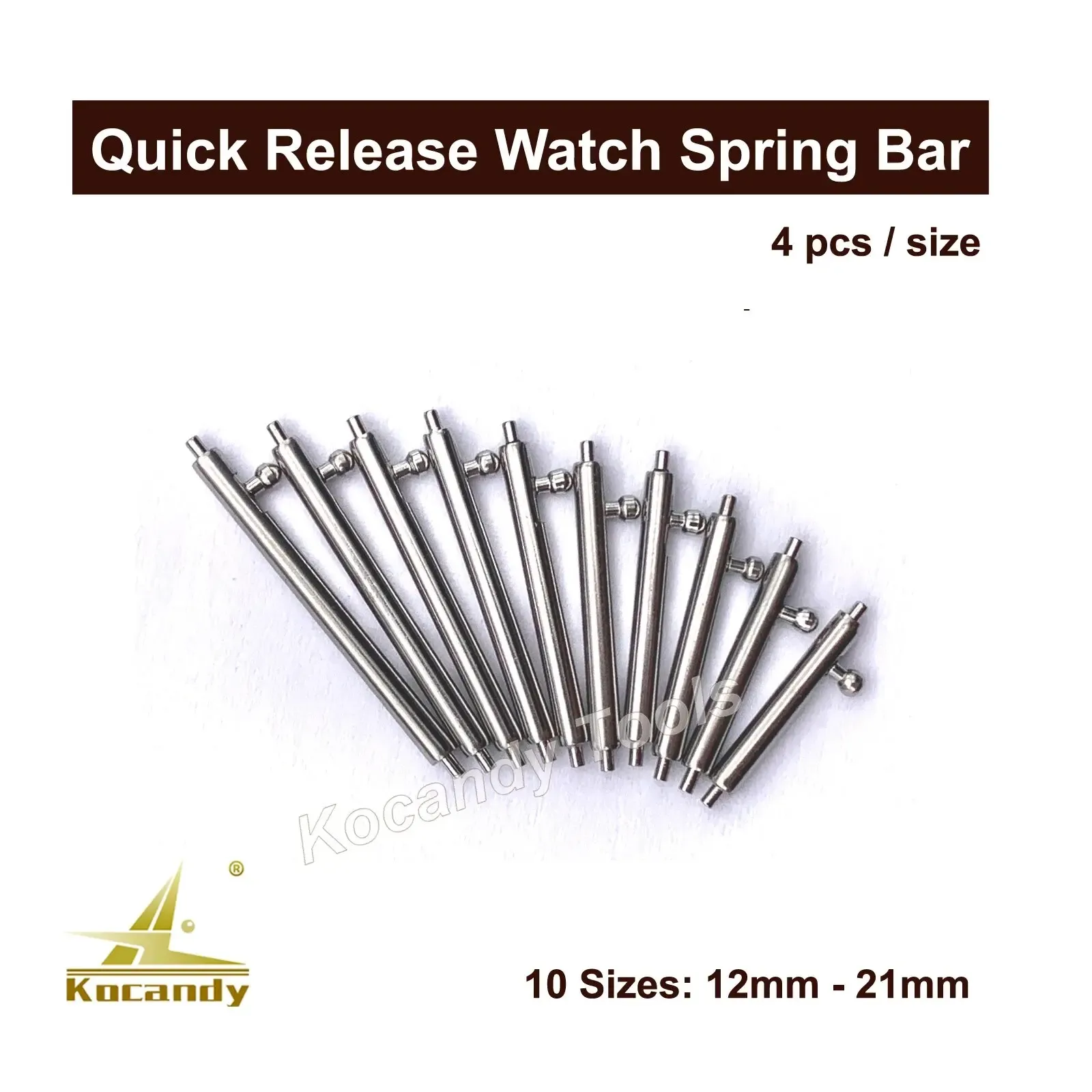
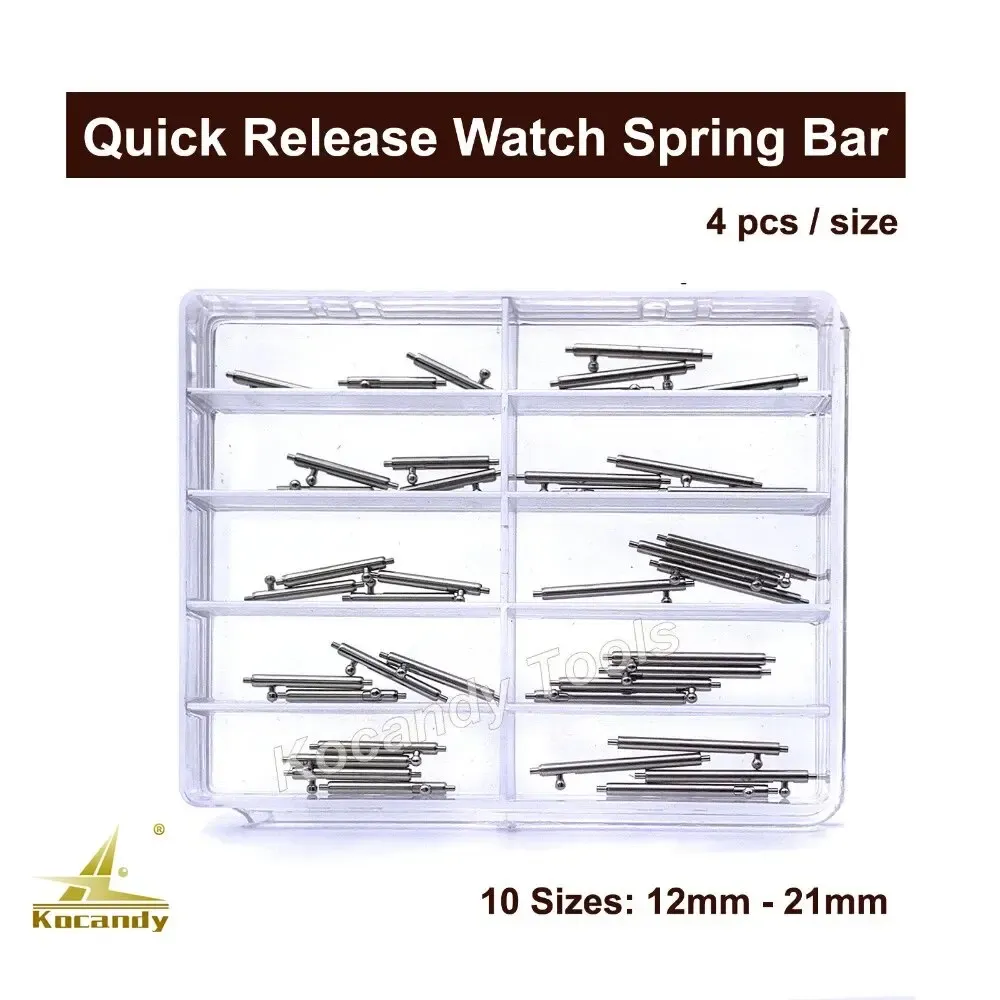
Ten-size quick-release spring bar assortment spanning 12 mm to 21 mm lengths with 1.78 mm diameter (model RH0002345).
Comparing quick-release and double-flange hardware options
The table below outlines the mechanical configurations, stated dimensions, and intended strap styles across our quick-release, double-flange, and specialized rivet-end link hardware.
Type | Stated lengths | Stated diameter | When to use | Product link |
|---|---|---|---|---|
Quick-release box assortment (RH0002345) | 12 mm, 13 mm, 14 mm, 15 mm, 16 mm, 17 mm, 18 mm, 19 mm, 20 mm, 21 mm | 1.78 mm approx. | Straps with precut lever slots; tool-free strap changes | |
Quick-release repair pins | Confirm by message | 1.5 mm and 1.8 mm | Straps with precut lever slots requiring 1.5 mm or 1.8 mm thickness | |
Double-flange single-size bag (SP0000036) | 20 mm | 1.78 mm approx. | Conventional closed strap sleeves or bracelets on 20 mm lug cases | |
Double-flange 20-size workshop box | 8 mm to 28 mm (20 sizes) | 1.5 mm approx. | Bench fitting across multiple strap widths from 8 mm to 28 mm | |
Rivet-end strap link pins (SP0000035) | 16 mm, 18 mm, 20 mm, 22 mm, 24 mm | 1.5 mm tube | Specialized straps or cases designed for screw-secured lug rods |
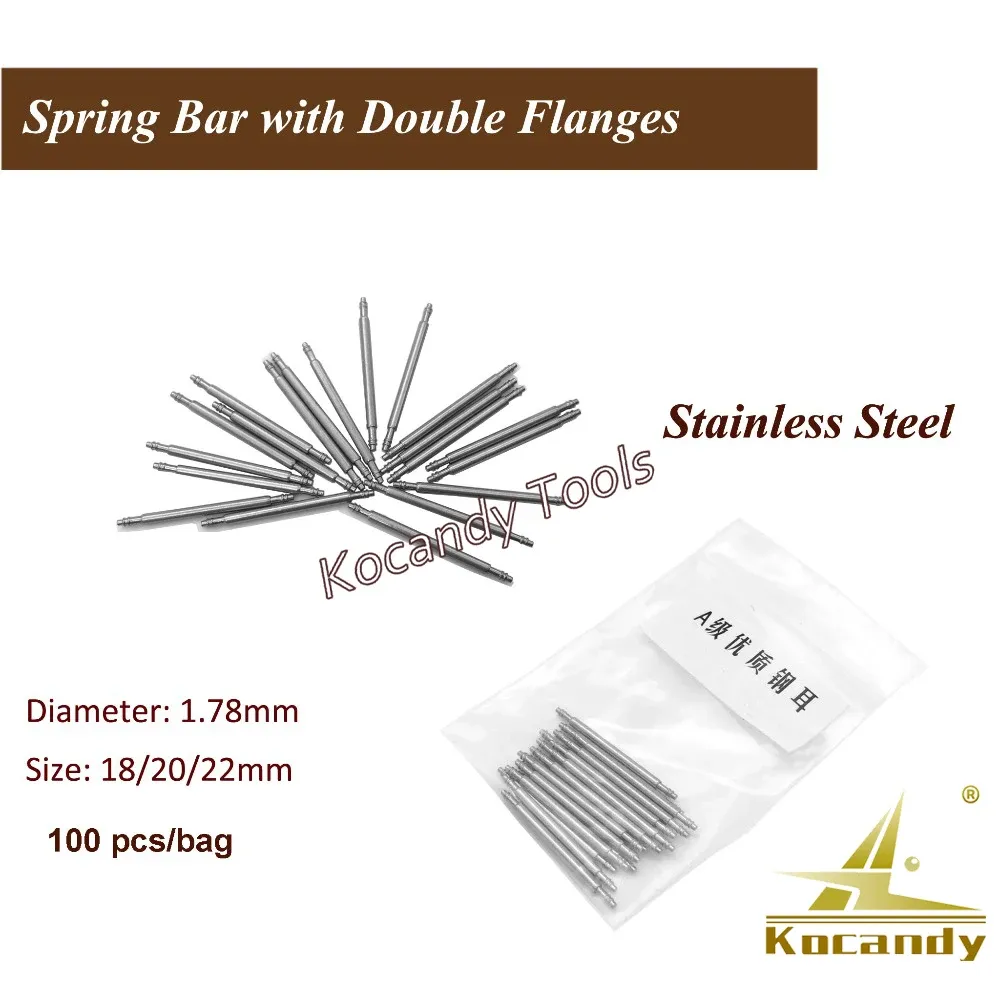
Double-flange stainless steel spring bars in stated 1.78 mm diameter and 20 mm nominal length (model SP0000036).
Workshop spring bar assortments spanning Seiko 5 lug spans
Watchmakers and enthusiasts maintaining multiple timepieces benefit from organized workshop assortments that keep popular 18 mm, 20 mm, and 22 mm dimensions immediately accessible. Our catalog includes multi-compartment organizers and bulk repair packs manufactured from corrosion-resistant stainless steel.
Before ordering, review the catalog specifications in the summary table below against your measured case dimensions. Where specific lengths are unstated in catalog listings, contact our workshop for physical inventory verification.
Product | Stated sizes | Stated diameter | Pack | Product link |
|---|---|---|---|---|
Quick-Release 10-Size Set (RH0002345) | 12 mm to 21 mm (10 sizes) | 1.78 mm approx. | 40 pcs (4 pcs / size) | Illustrated above (model RH0002345) |
Quick-Release Repair Pins | Confirm by message | 1.5 mm and 1.8 mm | 40 or 50 pieces | Listed in Table A (quick-release pins) |
Double-Flange 20 mm Pack (SP0000036) | 20 mm | 1.78 mm approx. | Approx. 100 pcs | Illustrated above (model SP0000036) |
Double-Flange 20-Size Assortment | 8 mm to 28 mm (20 sizes) | 1.5 mm approx. | Approx. 300 pcs (15 pcs / size) | Illustrated below (300-piece assortment) |
Rivet-End Silver Lug Pins (SP0000035) | 16 mm, 18 mm, 20 mm, 22 mm, 24 mm | 1.5 mm tube | 50 pcs (5 pcs / size) | Listed in Table A (model SP0000035) |
Rivet-End Gold Lug Pins Kit | 16 mm, 18 mm, 20 mm, 22 mm, 24 mm | 1.5 mm tube | 50 pcs (5 pcs / size) | Listed in Table A (gold variant available) |
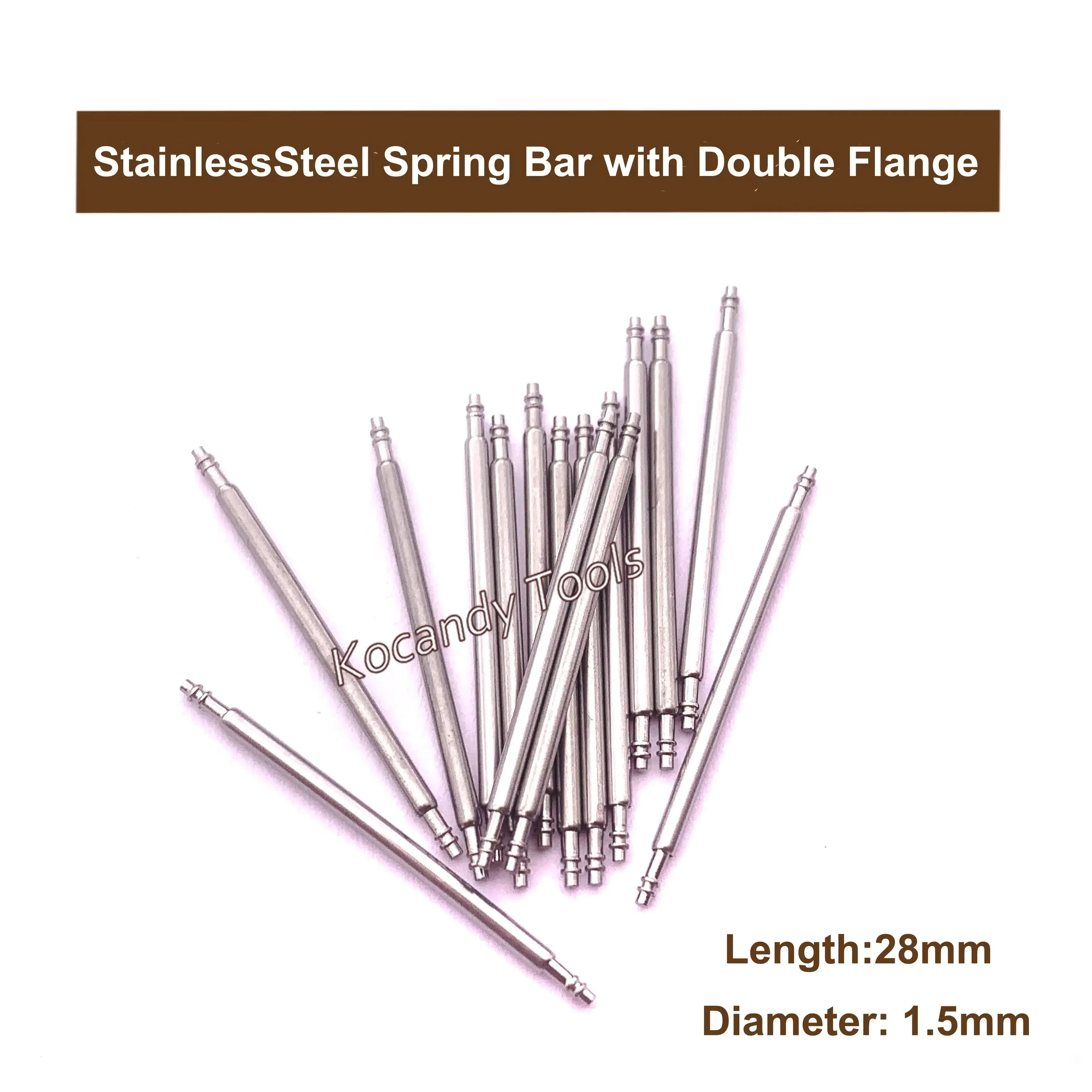
Double-flange spring bars showing 1.5 mm diameter and 20 mm length from the 20-size workshop assortment.
Spring bar removal tools for solid lugs: fork tips and 6825 pliers
Many Seiko 5 cases feature solid outer lug walls rather than drilled pass-through holes. Single-ended fork tools compress one shoulder at a time. While effective on flexible leather or nylon straps, single-side compression can cause rigid metal bracelet end links to bind obliquely inside the lug recess, trapping the opposite pivot.
For fitted metal bracelets and snug strap ends, spring bar plier tools compress both ends of the spring bar simultaneously. This balanced dual-jaw compression allows the solid end piece to slide straight forward out of the case without cocking sideways or marring the polished lug surfaces.
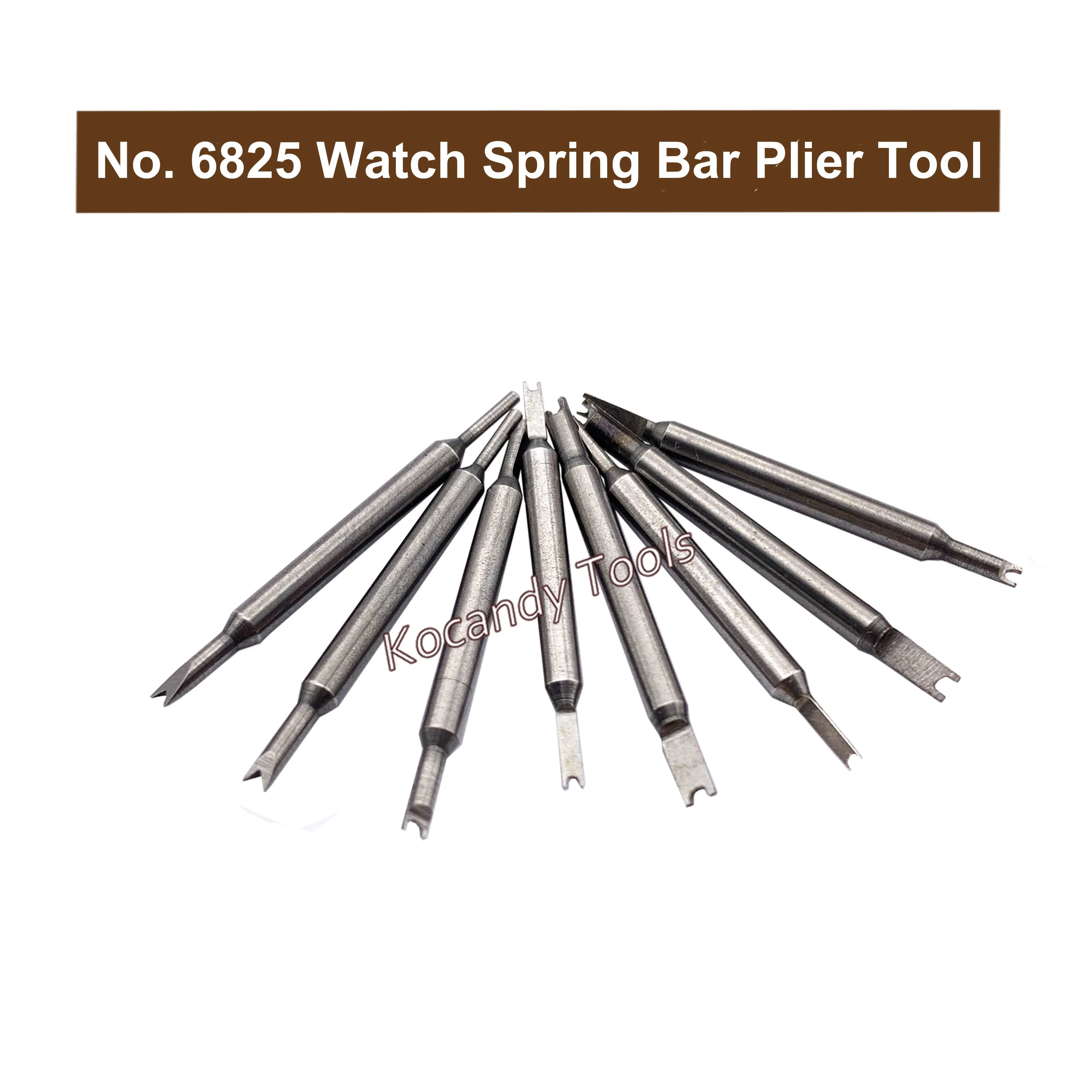
Our workshop supplies two dedicated 6825-style plier configurations. First, the 6825 spring bar plier tool set is built from 316L stainless steel and aluminium alloy with brass plating, featuring an adjustable screw lock spanning 0.28 inches to 1.18 inches (approx. 7.1 mm to 30.0 mm) and four interchangeable tip pairs: U-1.6mm, U-1.4mm, U-1.0mm, and V-0.8mm. Second, the standard 6825 bracelet spring bar pliers (model CH0000001, illustrated below) feature an aluminium body adjusting from 10 mm to 30 mm width with angle-positioning notches from 0 to 45 degrees, offering reversible stainless steel forks in 1.10 mm fine and 1.30 mm standard widths.
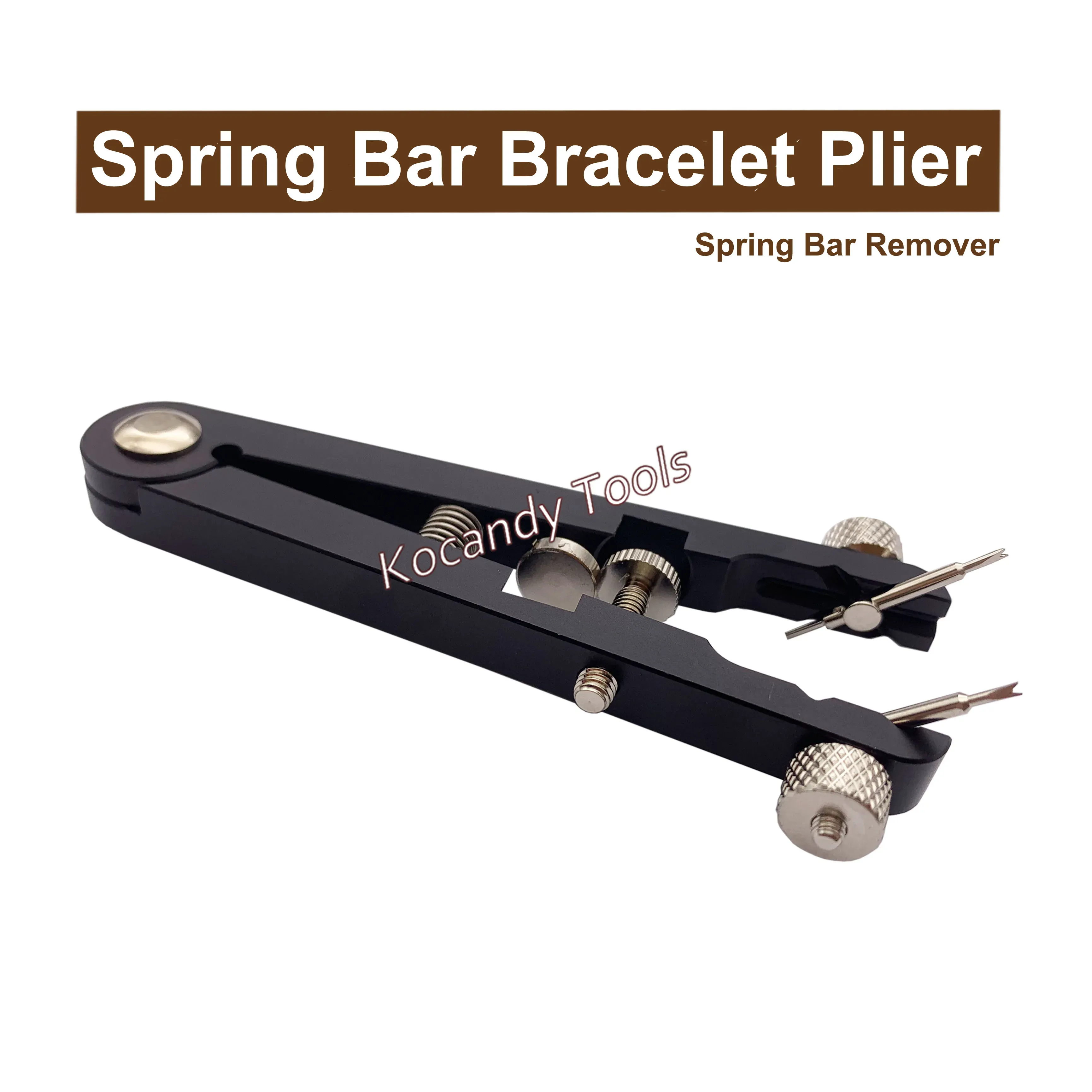
Adjustable bracelet pliers spanning 10 mm to 30 mm with reversible stainless steel forks (model CH0000001).
Brand disclaimer and bench compatibility checklist
Kocandy is not affiliated with, authorised by, or an official dealer for any watch manufacturer, including Seiko, Rolex, Omega, Citizen, Miyota, ETA, Bergeon, Horotec, Vetus, Richard Mille, or Hublot. All brand designations, model references, and series names cited across our guides and catalog represent nominal reference descriptions and stated catalog parameters only.
Before finalizing your spring bar selection, review this four-point bench checklist:
- Measured Lug Opening: Confirm the physical gap between your case lugs in millimeters using calipers instead of relying entirely on printed reference charts.
- Lug Hole Architecture: Verify whether your case uses drilled through-holes (compatible with straight push pins) or solid outer flanks (requiring double-flange forks or plier jaws).
- Strap Sleeve Cutout: Check the underside of your leather, canvas, or rubber strap to confirm it features an integrated lever slot before purchasing quick-release pins.
- Internal Sleeve Clearance: Verify that your strap channel accommodates 1.5 mm, 1.78 mm, or 1.8 mm pin tube diameters without binding or overstretching the material.
Bench inquiry identifier and technical support
If your measured lug opening, strap sleeve diameter, or specific watch reference is not listed in the comparison tables above, please send your details to our technical team anyway — we check against the catalog.
To request inventory verification or confirm parts compatibility for your watch project, visit our contact page:
Our workshop team reviews technical inquiries and will reply within one working day. When submitting your inquiry, copy and complete the following recap identifier directly in your message:
"my lug width is __ mm, my bar measures __ mm, quick release yes/no, thickness __ mm"